
India's climate change goals are turning combustible. On the one hand, a protracted dispute between the government and manufacturers over subsidies threatens to slow the pace of electric vehicle (EV) sales. On the other hand, repeated assertions by different arms of the government over banning sales of new fossil fuel-fired vehicles have queered the pitch for energy investments. Before we address the issue of the recommended diesel vehicle ban in the recent report on energy transition, issued months before the next round of global climate talks begin in Dubai in November, let's look at what's at stake.

Among Sensex stocks, Maruti rose the most, followed by Tech Mahindra, Mahindra & Mahindra and Asian Paints. Gains in Reliance, TCS, Infosys, HCL Tech, HDFC and ICICI Bank also helped the barometer extend its rally for a second day.

The share of foreign loans in total Adani group debt portfolio dropped to 61 per cent by September 2023 from 63 per cent as of March 2023, as the group repaid part of its foreign loans and refinanced part of older loans. The share of Indian lenders, on the other hand, rose to 39 per cent in the total debt pie in September 2023 from 37 per cent in March after a report by US-based short seller Hindenburg Research in January last year, which led to volatility in the share prices of group companies. The group's total debt remained static at Rs 2.26 trillion in the same period.

'Historically, the markets tend to perform well during election years as governments aim to increase spending and call attention to growth.'

The limited availability of flexible (flex)-fuel vehicles in the Indian market and the slow rollout of ethanol-blended petrol by oil-marketing companies (OMCs) remain major obstacles to achieving widespread use of biofuels in the transportation sector in India. Recently, two Union ministers have emphasised India's biofuel potential, arguing that it has the capacity and potential to lead a transition towards widespread biofuel adoption. Road Transport Minister Nitin Gadkari signalled that this transition is well underway and urged car manufacturers to quickly adapt and introduce new biofuel-run vehicles, lest the government resort to taxing diesel vehicles.

Earnings growth, attractive valuations and change in FPI flows from negative to positive over the next 12 months are some of the key triggers for an upside. "A poor monsoon, high inflation and further rate hike are some of the key risks

Eighty per cent, or 60 of the 75 companies that made their debut on the mainboard this financial year, ended their listing day with gains.

'We expect market consolidation and recommend buying during market dips.'

The 30-share BSE Sensex surged by 477.24 points or 0.83 per cent to close at more than one-week high of 57,897.48. As many as 28 of its constituents closed with gains while two declined. The broad-based Nifty of the National Stock Exchange rose by 147.20 points or 0.86 per cent to settle 17,233.45, tracking gains in Sun Pharma, Asian Paints, and Reliance Industries.

Amid a shift in mobility trends and people increasingly opting for less polluting energy sources, sales of compressed natural gas (CNG) vehicles increased more than 82 per cent in the past five years. A total of 729,902 CNG vehicles were sold in 2022-23 against 400,825 in 2017-18, according to VAHAN Dashboard. Though the increase in sales of CNG-powered vehicles has been significant, their share in overall vehicle sales remains minuscule as is the case with EVs.

Fresh buying by domestic institutional investors and better-than-expected June quarter results from some blue-chip companies boosted investor sentiment

With nearly a quarter of U.S. energy shares' value wiped out by oil's six-month slide, investors are wondering if the sector has taken enough punishment and whether it is time to pile back in ahead of earnings reports later this month.

India may see a structural shift in supplies of crude oil with Russia emerging as a key source of fuels, a development that reduces New Delhi's dependence on West Asian oil, gives Indian refiners better bargaining power with price-setter Saudi Arabia, and improves overall energy security. The unexpected surge in supplies of Russian crude in the last few months, unthinkable until the war in Ukraine, may also deliver other unforeseen gains such as boosting exports of refined fuels to Europe, which historically has counted on Russian shipments. India has jumped on to the bandwagon of opportunistic buying of Russian crude but if calibrated carefully, Urals crude can be a long-term asset for India refiners.

The S&P BSE Sensex has gained 149 points to open at 25,802.

Benchmark Sensex trimmed early gains to close marginally higher while Nifty settled flat in choppy trade on Tuesday as gains in auto shares were offset by selling pressure in banking and energy shares. The 30-share BSE barometer closed marginally up by 37.08 points or 0.06 per cent to 60,978.75 with 15 of its stocks ending in green and the rest in red. The index opened higher and gained over 300 points to a high of 61,266.06 in early trade.
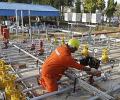
It is rare for Cabinet ministers to tick off state-owned companies publicly, yet that was what then petroleum and natural gas minister Dharmendra Pradhan did for ONGC. Speaking at an event on June 29, Pradhan said he has asked India's premier exploration company to find fresh oil acreages fast. "Do it yourself through some joint venture (or) through a new business model. But the government cannot permit you to hold resources for an indefinite time." The reason for this stricture is India's rising dependence on imported oil and gas. Or, to put it another way, falling domestic production (see chart: "Crude truth"), especially from ONGC, which faces a simple problem.

The global ratings agency keeps India's sovereign rating unchanged at 'BBB-' with stable outlook
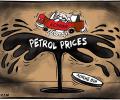
Petrol and diesel prices on Thursday climbed to fresh highs in the country as rates were hiked by the most in recent times, even as fuel retailers said the government can cut taxes to ease consumer burden. Petrol and diesel price was hiked by 35 paise per litre each after a gap of a week, according to price notification of state-owned fuel retailers. The increase took petrol prices to a fresh high of Rs 86.65 a litre in Delhi and to Rs 93.20 in Mumbai.

The S&P BSE Sensex shed 286 points to close at 24,539 and the Nifty50 lost 100 points to end at 7,456.

Textile stocks have exhibited a mixed performance so far this calendar year (CY23), amidst higher domestic cotton prices and tepid global demand. Shares of Page Industries, Dollar Industries, Lux Industries, and VIP Clothing have declined up to 13 per cent so far in CY23, as against a 9 per cent jump in the S&P BSE Sensex. On the contrary, shares of Arvind, Welspun India, Raymond, and Gokaldas Exports have gained up to 51 per cent, during the same period.
Equity markets rallied after softer-than-expected inflation data in the US and UK rekindled hopes of the end of the rate-hiking cycle by major central banks. The soft inflation reading drove down bond yields and the US dollar, whetting the appetite for risky assets. The 10-year US bond yield fell below 4.5 per cent after topping 5 per cent less than a month ago.

HCL Tech was the top gainer in the Sensex pack, rising over 4 per cent, followed by HDFC Bank, Infosys, NTPC, Nestle India, TCS and HUL. NSE Nifty surged 337.80 points to 14,845.10.

Wall Street-correlated stock markets are facing the risk of correction, as Christopher Wood, the global head of equity strategy at Jefferies, conveys to investors in his latest edition of GREED & fear. Rising crude oil prices, which are nearing $100 a barrel (Brent), pose a threat to the global central bank's battle against inflation and have led to a re-evaluation of its exposure to Indian stocks. "The potential for more US Federal Reserve (Fed) rate hikes, combined with the risk that monetary tightening finally bites as regards the economy, remains a risk for Wall Street-correlated world stock markets. "There is also the oil factor. This is why GREED & fear continues to believe the pain trade is down. "Areas in Asia, such as Indian midcaps, which have already done very well, are at obvious risk of some profit-taking," writes Wood.

'For experienced and risk-taking investors, now may be the time to go all in.' 'By 'experienced and risk-taking', I refer to those who remained net buyers in equities during the early stages of the 2020 pandemic.' 'On the other hand, those who exited the markets during the pandemic may go the SIP way.'

Earlier in May, Ford India announced that it had dropped its plans to make electric vehicles (EVs) in India, which it intended to export, under the production-linked incentive scheme (PLI). Ford was among 20 companies that had signed a Champion OEM Incentive Scheme under the PLI project with the government in February this year. The decision comes as a blow for the 4,000-odd employees at Ford India's Maraimalai Nagar plant near Chennai and in Sanand, Gujarat. In September last year, the company had announced that it would exit the India market, which it had entered in 1995 through an on-again, off-again joint venture with Mahindra & Mahindra (they split in 1998, signed a JV in 2019 and split again in December 2020), retailing petrol and diesel brands such as the EcoSport, Figo, Aspire, and Endeavour.

Usually, a fall in oil prices is followed with a cut in retail prices of auto fuels and the government passes on the benefit to consumers. However, Morgan Stanley believes gains this time around will remain capped.

Just because India has outperformed the US markets in a short recent period, it does not mean that this is based on fundamental reasons that are here to stay, points out Debashis Basu.

With the Nifty50 just about 3 per cent away from its all-time closing high of 18,812 points, analysts at BofA Securities suggest investors book profit. Their reasons for the advice include risks like the possibility of a cut in corporate earnings growth forecasts, high valuation (one-year forward P/E of 19.5x), interest rates staying elevated for longer-than-expected and credit tightening. Going ahead, they expect the Nifty50 index to drop to 16,000 levels - down nearly 12 per cent from the current level of 18,255 points, which they believe would be a good time to buy.

'India seems to be on a relatively better wicket compared to other emerging markets.'
Financials and auto stocks were the top losers while energy and IT shares recovered

The Indian indices also offer one of the lowest dividend yields.

The combined market-cap of all listed Adani group firms has plunged nearly Rs 7.11 trillion since January 24 when the Hindenburg report was made public.

The global semiconductor shortage is turning into a headache for automotive (auto) and appliance manufacturers. But it is proving to be a boon for equity investors. Semiconductor stocks are among the best performers this year. The PHLX Semiconductor Index has gained more than 35 per cent year-to-date.

rediffGURU Ramalingam Kalirajan answers your personal finance queries.

Sentiments took a hit after broader Asian markets weakened, following a renewed sell-off on Wall Street on Tuesday as energy shares dropped after crude oil prices plunged to a 13-month low amid weak earnings and US-China trade disputes, fuelling worries about economic growth
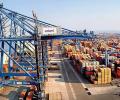
S&P Dow Jones Indices on Tuesday said it will remove Adani Ports and Special Economic Zone from its sustainability index following reports of its business ties with Myanmar's military that has been accused of human rights violations after a coup. The Adani Group firm is building a $290 million port in Yangon. In a statement, S&P Dow Jones Indices said: "Adani Ports and Special Economic Zone will be removed from the Dow Jones Sustainability Indices following a media and stakeholder analysis triggered by recent news events pointing to heightened risks to the company regarding their commercial relationship with Myanmar's military, who are alleged to have committed serious human rights abuses under international law."

Speaking at industry association CII's annual session, PM Modi said the government has taken tough steps to fight the coronavirus pandemic and has also taken care of the economy. "On the one hand we have to safe the lives of our people and on the other hand we have to stabilise the economy and speed up the economy," he said. "Yes, we will definitely get our growth back," he asserted.

The market breadth, indicating the overall health of the market was strong

However, in the last few sessions, the stock of Mukesh Ambani-controlled Reliance Industries Limited (RIL), hit its 52-week low level of Rs 2269.75, and has been one of the worst performers among the Sensex pack thus far in calendar year 2023 (CY23). Thus far in CY23, RIL has tanked nearly 11 per cent as compared to a fall of around 5 per cent in the S&P BSE Sensex. The fall in the stock, according to Gaurang Shah, senior vice-president at Geojit Financial Services is mostly due to the overall dip in the market sentiment, which in turn has impacted large-caps, including RIL.

The S&P BSE Midcap and the S&P BSE Smallcap indices slipped in red to shed over 1% each
